The Biggest Innovation in School Safety Isn't Another Device, It's Connected Response
Integrated alerts, location data, video and digital maps can give school staff and responders faster context during emergencies.
- By Brent Cobb
- September 22, 2026
For years, the conversation around school safety technology has largely focused on adding capabilities. Schools have invested in cameras, access control, visitor management, panic buttons, and other tools designed to protect students and staff. A 2025 study showed that 75% of principals believe their security measures have a positive effect on school climate.
While those investments remain essential, the next era of innovation will not be defined simply by adding another tool. It will be defined by how effectively those technologies work together to create safer school environments.
This shift is already visible in technology and policy, as schools increasingly connect emergency alerting, location information, digital mapping, and public safety systems. While that connectivity is essential during an emergency, its value extends across the school day, giving leaders greater visibility into the people, patterns, and events shaping campus safety.
Integration is the innovation
Many districts have already made significant investments in safety infrastructure. The opportunity now is to connect those investments in ways that provide greater clarity for onsite teams and emergency responders.
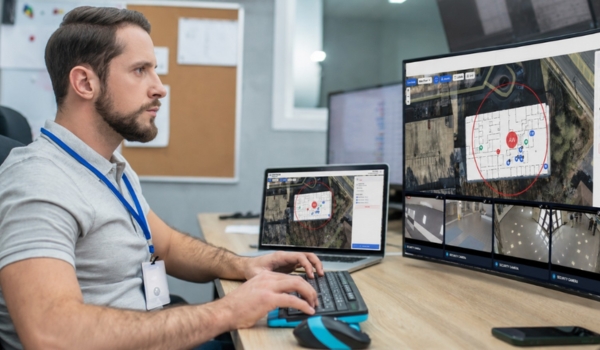
Consider what happens when a staff member signals for help. An alert indicates something has happened. Locating abilities show where. Video provides context. Digital maps guide responders, while communication systems help coordinate action.
When these capabilities operate independently, every handoff can add time and uncertainty. When they work together, the right people receive the right information sooner. This is where some of the most meaningful innovation is happening today: connecting existing investments to enable faster, more informed response.
From notification to situational awareness
Speed has always been fundamental to emergency response. But speed is most valuable when paired with context. The next generation of safety technology is increasingly focused on solving for that gap.
Video integration is a strong example. Security cameras have long been invaluable for monitoring campuses and investigating incidents. However, their value increases when responders can see the camera feeds closest to an incident in real-time, without searching through hundreds of feeds.
CENTEGIX recently partnered with Rhombus to connect wearable panic button alerts with real-time video. When a staff member activates an alert, the precise location automatically surfaces relevant camera feeds. This allows the alert to bring immediate visual context to responders.
The innovation is not the camera or panic button, but the connection between them. By closing the gap between notification and understanding, responders can act with greater clarity and confidence.
Designing for everyday safety needs
Innovation also must reflect the reality of the school day, not only the most extreme threats.Data from more than 346,000 wearable panic button alerts during the 2025-2026 school year illustrates that reality.
99% of events captured were everyday safety incidents rather than extreme, campus-wide emergencies. Among those incidents, 88% were behavioral and 10% were medical. And 58% of incidents occurred outside of classrooms.
Understanding the full safety picture also requires looking beyond individual incidents. Attendance, dismissal, hall pass activity, visitor movement, and other operational signals can reveal patterns and emerging needs, helping leaders make more informed decisions about policies, training, and prevention.
School leaders must think beyond, "What tools do we have for our worst day?" and ask, "How does our safety infrastructure help protect our people every day?"
Turning connected information into proactive safety
Visibility across the school day can help leaders move from reacting to events toward proactively strengthening their safety strategies. Recurring issues in one hallway or during a particular transition, for example, can reveal where additional support or intervention may be needed. Awareness of community challenges and local risks can inform where support may be needed off campus.
Over time, those insights create a cycle of continuous improvement, helping schools evaluate what's working, respond to emerging needs, and make more informed decisions.
Policy is reinforcing the importance of this connected approach. Florida, for example, requires school mapping data to be digital and compatible with software platforms used by public safety agencies. Its statewide alert framework connects panic alerts, location information, and digital maps with 911 and emergency responders. Similarly, West Virginia's 2026 Alyssa's Law legislation calls for wearable panic alert technology and law enforcement access to school security information, including cameras, maps, and access control.
These developments point to a broader shift in school safety. Preparedness is not just about having the right tools. It is about ensuring that technology, information, and people can work together to create safer, more informed, and more responsive school environments.
Building around the responder
The best technology is designed for the people who rely on it. In a crisis, teachers, staff, security teams, and responders must be able to focus on the situation in front of them, not on navigating disconnected systems.
When technology works together, each component strengthens the next. That's the opportunity ahead for innovation. The future of school safety isn't about putting more technology into schools. It's about removing uncertainty from the moments when people need help most.