Michigan District Sets Blueprint for National SRP Compliance
Saline Area Schools integrates the Standard Response Protocol into digital communication systems to ensure clarity during emergency incidents.
- By Terry Swanson
- April 30, 2026
As school districts nationwide look to address evolving safety challenges, being able to have a shared language when addressing emergencies is becoming a crucial component of ensuring a quick response. When staff, students and first responders all use the same terminology for events and actions, responses become more coordinated, confusion is reduced and help is delivered more effectively.
In Michigan, that expectation is about to become formal policy. By the 2026-27 school year, all schools in the state will be required to adopt Standard Response Protocol (SRP) terminology, marking a significant step toward statewide consistency in emergency communications used by schools and local law enforcement.
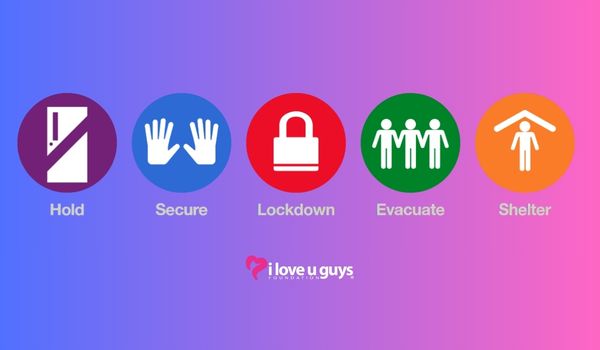
Developed by the “I Love U Guys” Foundation, the SRP is built around five simple, action-based directives: Hold, Secure, Lockdown, Evacuate and Shelter. Each term is designed to remove ambiguity during high-stress situations by ensuring students, staff and first responders share a common understanding of what actions to take.
Rather than needing to create a safety strategy from scratch or rely on code words or individualized procedures that might vary by district or school, the SRP offers a solid foundation districts can reference that emphasizes clarity, consistency and speed.
Michigan’s statewide adoption underscores a broader national trend toward standardization in school safety practices. As districts work to align procedures and training, many are also evaluating how technology can reinforce these protocols in real time.
Aligning Policy, Training and Technology
While it may seem simple to adopt SRP language, schools need to have a plan in place to ensure it’s used consistently across every communication channel during an emergency. That includes being able to deliver messages during classroom instruction, drills, staff training and across the digital systems that provide alerts and instructions.
Leaders at Saline Area Schools in Michigan have taken a proactive approach to this alignment. Under the leadership of Director of Technology Jay Grossman, the district has worked to integrate SRP language directly into its emergency communication workflows so that messaging is consistent wherever it appears.
A key focus of this effort has been ensuring that terminology used during an incident matches what students and staff practice during drills. When language changes between training and real-world alerts, response time can slow as individuals interpret instructions. By contrast, reinforcing SRP terms consistently helps reduce hesitation and uncertainty.
Communication Outside the School
According to guidance developed by the “I Love U Guys” Foundation, SRP is intended not only for internal school use but also as a communication tool for families and first responders. Parents and guardians also benefit from understanding what each term means, particularly when guidance differs depending on the classification of the incident.
For example, during a Secure action, schools continue normal operations while securing exterior doors due to an outside threat. During a Lockdown, however, all occupants are instructed to move out of sight, remain silent and not open doors until the situation is resolved.
These distinctions highlight why consistent language matters.
Saline’s Approach: A Practical Implementation Model
Saline Area Schools’ implementation strategy offers a useful example for other districts preparing for SRP adoption. Rather than treating the requirement as a standalone policy update, the district has focused on embedding SRP language into the systems used every day to communicate with staff and students.
This includes aligning digital signage and emergency alerts so that SRP icons and terminology appear consistently across multiple platforms. The goal is to ensure that when an alert is issued, the message is delivered quickly and is visually and linguistically aligned with what individuals have been trained to recognize.
In practice, this means that a Lockdown alert is not just a verbal announcement. It is reinforced through visual cues on screens, speakers, notifications on devices and, where applicable, other alerting mechanisms within the building like strobe lights. This multi-channel approach helps ensure accessibility for all individuals, including those in noisy environments or with hearing or vision impairments.
Saline’s approach also reflects an emphasis on interoperability. Many districts already use a range of safety and communication tools, but Saline has an integrated system that allows them to build and deliver messages aligned to SRP language and include SRP icons. The system allows them to leverage existing structure while streamlining their alerting process and keeping messaging consistent.
Lessons for Districts Preparing for SRP Adoption
As more states consider standardized emergency language, Saline’s implementation highlights several practical considerations for districts:
First, alignment between training and communication systems is essential. If students and staff are trained using SRP terms but receive alerts in a different language during an incident, confusion can undermine response effectiveness.
Second, consistency across platforms matters. Emergency messaging should be reinforced visually and audibly wherever possible, ensuring that individuals receive the same instruction regardless of how they are connected to the system.
Third, accessibility should be built into emergency communication planning. Effective systems account for different physical spaces and individual needs, ensuring that all students and staff can receive and understand instructions quickly.
Finally, districts benefit from treating SRP adoption as an ongoing process rather than a one-time implementation. Regular drills, updates to communication tools and continued training help reinforce familiarity.
A Broader Shift Toward Standardization
As Michigan moves toward full SRP implementation, Saline Area Schools provides a clear example of how districts can begin preparing now. By aligning training, communication systems and emergency messaging around a shared language, schools can reduce ambiguity and strengthen response readiness.