School Safety Gaps Persist Despite New Legislation
Survey data shows many teachers still lack access to panic buttons and schools face significant staffing shortages.
- By Jesse Jacobs
- May 12, 2026
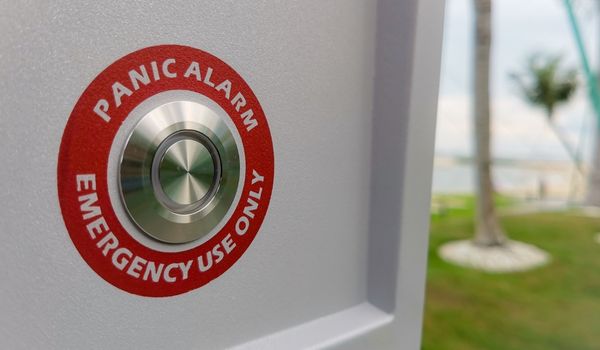
A new report on the state of school safety reveals significant gaps in emergency readiness and operational security across U.S. K-12 campuses. Despite the national expansion of Alyssa’s Law, which mandates silent panic alarms, nearly 40% of teachers report having no panic button in place at their school.
The 2026 Safety and Operational Readiness Report, released by Singlewire Software, highlights a disparity between school administrators and teaching staff. While 45% of administrators have access to mounted panic buttons, only 19% of teachers report the same. Overall, only one in five staff members feels "extremely confident" that help will arrive quickly after a request for assistance.
Staffing shortages have emerged as the primary obstacle to securing school buildings. The number of respondents citing a lack of staff as a major challenge rose from 30% in 2025 to 46% in 2026. While 86% of school staff prioritize front entrance security, only 16% believe their entrances are "completely secure".
Security concerns extend beyond the school building. Over 50% of respondents identified parking lots and outdoor playgrounds as the least secure areas on campus. Furthermore, dismissal remains a point of regular friction. According to the data, 63% of respondents experience dismissal-related issues requiring staff intervention at least once a month. Only 14% of schools currently use a digital solution to coordinate student release and verify guardians.
Technical Gaps in Guest Verification and Emergency Hardware
While many districts have implemented basic physical security measures, the report identifies a significant reliance on antiquated verification methods.
Visitor Management Vulnerabilities
Although 71% of schools require guests to present a photo ID, 33% of staff report that visual inspection is the only check performed. Currently, only 19% of schools utilize a digital visitor management system capable of cross-referencing guest identities against security databases. Furthermore, 17% of campuses still rely on pen-and-paper sign-in sheets, which offer no real-time vetting or historical data tracking.
Reliability of Communication Tools
The speed of emergency response is often hindered by the manual nature of the tools available to staff. When requesting assistance, the majority of school employees must use time-consuming methods:
- Radios and Walkie-Talkies: Used by 32% of staff as their primary request method.
- Phone Calls: Utilized by 31% of staff for emergency communication.
- Mobile/Desktop Apps: Only 12% of staff utilize digital applications to signal for help.
Disparities in Emergency Confidence
Confidence in security measures is not uniform across departments. Security personnel are significantly more confident in their ability to locate students (69%) than teachers (35%). This perception gap extends to the physical environment; teachers are less likely to rate school entrances as "completely" or "very" secure (55%) compared to security staff (79%).