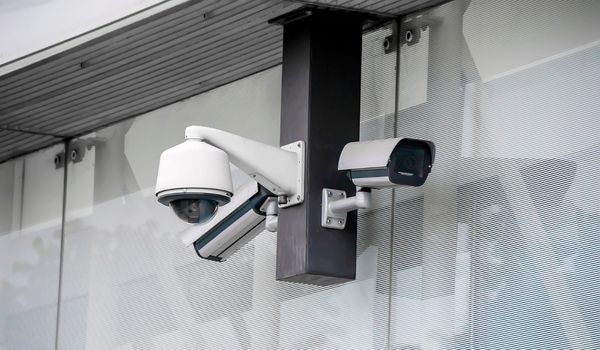
Critical Infrastructure: Rethinking Facility Hardening
Utilities and data centers are replacing passive monitoring with radar-guided cameras and on-premises AI to eliminate security blind spots.
- By Adam Lowenstein
- May 19, 2026
Mission-critical facilities operate under a different standard. Utilities, data centers, transportation hubs, and water treatment facilities cannot afford blind spots or tolerate downtime. As security postures evolve, these sites should no longer rely on reactive security models built around passive recording and human monitoring alone.
Facility hardening today means designing layered protection that detects earlier, responds faster, and automates intelligently, while operating within strict cybersecurity and network constraints.
The conversation has shifted well beyond camera quality and coverage area. It now centers on automation, intelligence at the edge, and data, more than raw video pixels, as the source for alerts and enhanced operational intelligence.
Perimeter Hardening Through Sensor Collaboration
The perimeter remains the first and most critical line of defense. Traditional video systems struggle in this domain, particularly across wide areas, in low light, or during severe weather.
Millimeter-wave security radar changes that equation. Operating independently of lighting conditions, radar provides continuous wide-area detection and precise object tracking across a 180-degree field of view. When integrated with AI-enabled PTZ cameras, the result is automated visual verification. Radar detects motion or intrusion within a defined zone, shares location coordinates with PTZ cameras, and the cameras automatically track the target in real time.
This automation eliminates the lag between detection and visual confirmation. Operators are not manually steering cameras to search for an intruder. The system manages that transition instantly. In unmanned facilities, this capability becomes even more important. Radar-guided PTZ automation enables responsive perimeter monitoring without requiring constant human oversight.
Facility hardening increasingly depends on this type of coordinated automation. It reduces false alarms, accelerates decision-making, and ensures that attention is focused only where it is needed.
Automating Access Monitoring and Long-range Camera Zoom
Gate control and vehicle monitoring present another high-risk vulnerability. High zoom bullet cameras equipped with powerful optical zoom and infrared illumination allow long-range monitoring of roadways, gates, and perimeter access points.
When paired with license plate recognition applications such as Vaxtor, these cameras can automatically zoom in on a vehicle arriving at a gate, capture a clear plate image, process the plate data, and then zoom back out to maintain wide-area situational awareness.
The key is automation. The system detects a vehicle entering a designated zone, triggers zoom for validation, processes the metadata, and reverts to its previous monitoring position without manual intervention. Security teams do not need to operate cameras or manually initiate plate capture. This workflow reduces human error and ensures consistent identification performance across shifts and staffing levels.
In high-throughput environments, that level of automation becomes essential. Human operators cannot reliably track every vehicle across multiple lanes and gates. Automated zoom and analytics close that gap while preserving operator attention for escalation and response.
Edge Intelligence and Isolated Networks
Many mission-critical environments operate under strict network isolation policies. Internet connectivity may be limited or entirely prohibited. Cloud-based workflows and analytics, while convenient in other verticals, are often susceptible to cybersecurity risks.
This requirement helps drive more intelligence to the edge and into on-premises systems. AI-enabled cameras generate descriptive metadata directly at the source, transforming video into lightweight, structured data without streaming heavy video data offsite. Edge processing reduces bandwidth requirements and ensures intelligence remains within the secured network.
Generative AI is extending a security team’s ability to interact with data further than ever. Traditional metadata-based search relies on predefined attributes. While effective, it requires operators to preconfigure structured filters. GenAI-enabled systems allow free text queries such as “white pickup truck near north gate” or “person who fell,” significantly accelerating investigations or real-time alerts.
While many GenAI workflows are processed in the cloud, for mission-critical sites, this functionality must operate entirely on-premises. Critical infrastructure deployments require that any GenAI-based search run on local servers without external internet connectivity. In these workflows, best-shot images and metadata generated at the camera are processed within the secure environment, enabling natural language search while maintaining network isolation.
In organizations where compliance, data sovereignty, and cyber resilience are critical, this architecture allows operators to gain the speed and usability advantages of GenAI without exposing sensitive infrastructure data to external networks.
Cybersecurity as a Hardening Pillar
Facility hardening no longer applies solely to fences and reinforced doors. Cybersecurity has become inseparable from physical security. Cameras and sensors are networked computing devices. If compromised, they become entry points rather than protective assets.
Mission-critical deployments require hardened devices built with secure-by-design principles. Features such as secure boot prevent unauthorized firmware from executing. Signed firmware ensures that only validated software updates can be installed. Embedded secure elements with FIPS 140-3 Level 3 certification protect cryptographic keys against tampering, even in the event of physical access.
Encryption through HTTPS and TLS, certificate management, and proper network segmentation further reduce attack surfaces. These controls must be treated as standard configuration, not optional enhancements. Installers should follow a basic security checklist: turn off features that aren’t being used, require strong passwords and login controls, keep camera networks separate from the core business network, and make sure firmware is updated regularly. An isolated network is not inherently secure if devices within it are poorly configured.
Reducing Human Intervention with Intelligent Automation
One of the persistent challenges in critical infrastructure protection is staffing. Security teams are often stretched thin across vast properties. Operators monitor dozens or hundreds of cameras simultaneously. Fatigue, distraction, and information overload are constant risks.
Automation addresses this problem directly. Radar-driven PTZ tracking, automated zoom for vehicle identification, AI-based anomaly detection, and GenAI-enabled alerts all reduce the cognitive load on human operators. Instead of scanning walls of video, teams respond to prioritized, validated alerts.
Metadata-based alerting also reduces false alarms by filtering environmental noise before it reaches the operator. AI can distinguish between an animal crossing a perimeter and a human intruder, between routine vehicle movement and loitering behavior. This improves signal-to-noise ratio and increases confidence in alerts that do require intervention.
Facility hardening is not about replacing personnel. It is about augmenting them with systems and processes that boost efficiency.
The Future of Hardened Infrastructure
Mission-critical sites are moving toward automated security environments where radar, video, access control, and analytics work together in real time. Intelligence is shifting to the edge, investigations are getting faster with GenAI, and cybersecurity is being built directly into the hardware from the beginning.
Facility hardening today is about practical performance. Systems need to detect earlier, confirm automatically, operate without cloud dependence, and stand up to cyber threats. For critical infrastructure, hesitation has consequences. When something happens at a fence line or a gate, the system must respond immediately, not waiting for someone to notice it on a screen.
This article originally appeared in the May June 2026 issue of Campus Security Today.