Remote Possibilities
Ways to manage school safety and security even when you’re not on campus
- By Bruce Canal
- September 15, 2022
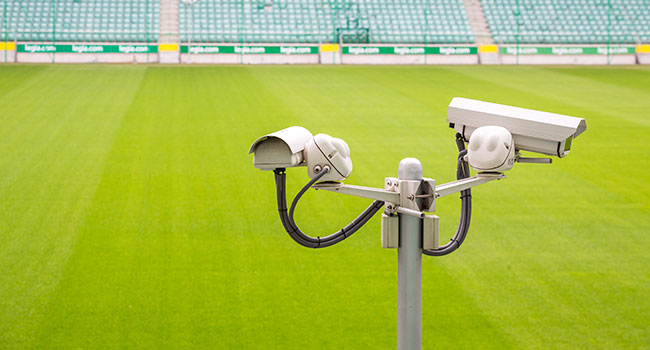
It’s 3 a.m., and some kids decided to climb the fence and play a little touch football on the athletic field. The motion-sensing cameras trigger an alert. Who’s receiving that alert? And what can they do about it if they’re not onsite? In the past, they might have driven back to school to assess the situation or simply called the police to investigate. In the interim between the alert going out and responders arriving on the scene, property could be damaged, or someone could have gotten seriously injured—a liability issue for the school.
If, on the other hand, the person receiving the initial alert had remote access to the school’s security system, it would be different story. With remote access, they could pursue several actions in real time to mitigate the situation. For instance, they could turn on floodlights or a siren to scare off the trespassers or broadcast a warning message through the stadium’s speaker system to vacate the premises. They could direct the camera to zoom in on the perpetrators and send a snapshot to the police for identification, or any number of other options right from their home computer, smartphone, laptop, tablet, or other mobile device.
Whether events happen during school hours, in the dead of night, or the wee hours of the morning, having remote access to surveillance cameras, door-locking mechanisms, and other security systems could make the difference between achieving a good outcome or a bad one. Remote access is a valuable tool to have in the safety/security toolbox, whether security officers are operating from a command center or patrolling the campus. And remote access can also be a vital way for first responders—whether school administrators, police, fire, or emergency medical—to obtain the critical real-time information they need to manage an event safely.
Keeping Remote Access Secure
Controlling who has remote access to a school’s security system mirrors how users access the system locally. Usually, the system administrator grants or denies remote privileges through an active directory, which allows users and levels of privilege to be added or deleted with a few keystrokes. Depending on the remote user, permission might be broad or limited to specific cameras, doors, and data for the duration of an event. Implementing firewalls and data encryption prevents users from gaining access to restricted areas beyond the scope of their privilege.
While there are many advantages to enabling remote access to a school’s security system, three areas where it comes into play most often are surveillance, access control, and information dissemination.
Surveillance: Situation Awareness in Real Time
Surveillance cameras excel at capturing forensic evidence. When equipped with analytics like motion detection or crossline detection, they can also alert security to potential problems like the trespassing incident mentioned previously.
Remote access gives first responders—whether school administrators, police, firefighters, or another emergency agency—the ability to securely tap into the live-streaming video with their mobile device, observe events unfolding in real time, and plan an appropriate course of action while enroute to the scene. This is particularly useful when preparing to neutralize a threat like an active assailant or to assess damage during a natural disaster like a flood or tornado. Remote access enables authorized users to push video out to first responders and guards on patrol and, conversely, allows first responders and security staff to use their mobile devices to push video of the scene back to the command center. As many situations tend to be fluid, being able to remotely access the cameras ensures that responders can stay abreast of current conditions even as they continue to evolve.
In a situation like a natural disaster, where school officials might be barred from the site for a while, the ability to assess conditions remotely via the surveillance cameras would be advantageous. If the damage was extensive, they could start the ball rolling on finding other accommodations for their students. At the same time, they could get a jump on contracting suppliers and construction crews to repair the damage and get the school back up and running sooner.
Access Control: Remote Locking/Unlocking Doors
Most schools have instituted automated systems for quickly shutting and locking doors in an emergency. With a few keystrokes, they can lock down the school to block or contain an active assailant and save lives. With remote access control, however, school officials and even authorized first responders can manage that action from a mobile device, even when they’re nowhere near the building.
Harrowing situations aside, there are more opportunities for appreciating the convenience of remote access control than you might think. As mentioned previously with appraising property damage due to a natural disaster or trespassing, instead of going out in the storm or the middle of the night, the superintendent could unlock the door remotely from the comfort of their home to let police enter the building and look around. Or, for instance, if the night custodial staff forgets their key, having someone with authority able to remotely unlock the door to the building for them is a real convenience.
If the school rents out space for evening classes, the local theater group, or a community basketball league, and the third party in charge loses their keycard or forgets their PIN code for the door—or perhaps was never issued a key—a school facilities manager can unlock the door remotely for them and lock all the doors securely after the event.
Information Dissemination: A Critical Data-Sharing Portal
Schools may be reluctant to give police, fire rescue, and other emergency agencies 24/7 access to a school’s security system, viewing it as a breach of privacy. But in an emergency—such as an armed assailant, a toxic chemical spill, flash flood, rapidly advancing wildfire, or a tornado warning—quick access to critical information about the location and unfolding events could save lives.
In answer to this quandary, some school districts, colleges, and universities are creating secure web portals for managing these events. The portal might contain information like building floor plans; evacuation routes; the location of cameras, intercoms, and speakers; as well as links to enable responders to control doors, cameras, the lighting grid, public address systems, and other vital building operations. When an emergency occurs, a school official would temporarily grant public safety officials, emergency management, firefighters, and/or police remote access to the platform. Once the event resolves, the school administrator closes the portal, restoring the privacy of students, staff, and faculty.
Remote Access: From Troubleshooting Systems to Troubleshooting Threats
Remote access is nothing new in the security industry. Integrators regularly use remote access to diagnose and correct problems, download updates, and perform regular system maintenance remotely, in lieu of making expensive onsite service calls. Similarly, school administrators and security staff can use remote access to monitor and manage their security system from wherever they happen to be—at home, on campus, away on a business trip, or even on vacation. This kind of immediacy to receive alerts and act on events in real time can lead to better coordination with emergency responders and quicker resolution of incidents. And that, ultimately, is the goal of every campus safety and security operation.
This article originally appeared in the September / October 2022 issue of Campus Security Today.