Debunking "Set It and Forget It": Why Camera Lifecycle Management Is Essential
Treating video surveillance installations as static deployments invites critical data vulnerabilities, demanding automated patch management, hardware hardening, and proactive device decommissioning.
- By Ryan Zatolokin
- July 13, 2026
Campuses increasingly rely on network video surveillance to support safety, operations, and incident response. Yet a persistent misconception remains: once cameras are installed and connected, the job is essentially done.
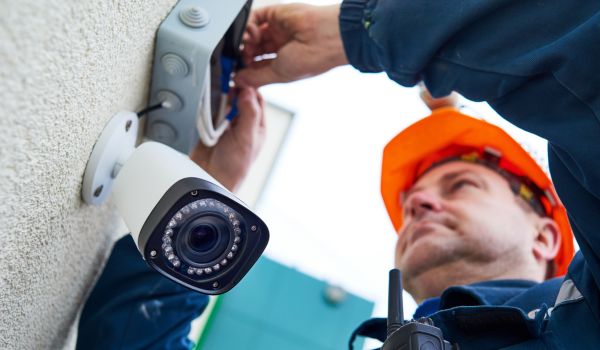
In reality, installation marks only the beginning of a camera's lifecycle. Network video systems require ongoing attention, from configuration and hardening to software updates, policy alignment, and eventual decommissioning. For campuses, treating surveillance as a static deployment introduces avoidable risk. Lifecycle management serves as the foundation for maintaining security, compliance, and operational continuity.
The Full Lifecycle of a Network Camera: From Deployment to Decommissioning
Modern cameras are not standalone devices. They function as connected endpoints within a broader ecosystem, which means their security posture must be managed throughout their lifecycle to ensure the security of the entire system. A comprehensive lifecycle approach to cybersecurity includes continuous updates and protection throughout every phase of deployment.
This begins before a device even reaches a campus with production and distribution. This means secure manufacturing practices, software integrity controls, and chain-of-custody considerations that establish cybersecurity baselines at the point of origin.
Next comes the implementation and initial configuration of the devices. After performing a standard factory reset, the device should be aligned with your campus’s IT security policy. Besides bringing any software up to date, this often means configuring the IP address, certificates, and other crucial settings that are required for both network and VMS integration. Importantly, any device installed must be hardened to meet IT security policies and compatibility with campus network environments.
In-service management represents the longest phase of a device’s lifecycle. During this period, devices require continuous software updates, which often include patches to address emerging common vulnerabilities and exposures (CVEs). Plus, if any applications are being used, ongoing performance optimization and feature maintenance are also required. As IT requirements evolve, ongoing policy alignment helps ensure devices remain compliant.
The final stages of a device’s lifecycle are the decommissioning and replacement. During this time, campuses must identify end-of-support timelines, plan replacements before vulnerabilities accumulate, securely wipe device data, and transition to newer hardware without operational disruption.
Why "Set It and Forget It" Fails in Real-World Campus Environments
As systems become more connected, unmanaged devices become more exposed. Instead of isolation, video systems are now connected to broader infrastructure and used in multiple tasks. This includes standard duties like remote monitoring, but it also includes the capturing of analytical data like queue monitoring and people counting. With all this integration, the surface area of attack becomes larger.
Cameras that aren’t actively maintained can become a weak entry point into broader networks. Key risks compound over time in several ways, including default or weak passwords that remain unchanged, devices running outdated software containing known vulnerabilities, and misalignment with IT security policies.
Vulnerabilities Are Inevitable, Management Determines Risk
It’s impossible for a connected device to be completely free from risk. However, there are simple steps that can help mitigate vulnerabilities. In instances where devices utilize open-source code, there are large communities that help identify vulnerabilities and issue patches for them.
When vulnerabilities are discovered through these and other proper management practices, they follow a predictable path. They are tracked as CVEs and given a score called a CVSS (Common Vulnerability Scoring System). This helps prioritize response and address vendor-released patches.
The main challenge lies in the speed and consistency of that response. Vulnerabilities can exist without immediate exploit, but the risk increases significantly when left unpatched. The longer devices remain unmaintained, the greater the exposure window becomes.
Campus environments face particular pressure here. Thousands of students, staff, and visitors interact with systems daily, creating an environment where even a single unpatched endpoint can evolve into disproportionate risk.
The Hidden Cost of Device Sprawl and Poor Inventory Visibility
One of the most overlooked challenges in lifecycle management is simply knowing what’s deployed. Across many campuses, surveillance systems include multiple camera models and generations, different software versions, mixed vendor environments, and legacy systems that have been in place for a decade or more.
Without centralized visibility, devices may go out of warranty unnoticed or reach the end-of-support and no longer receive new software updates. This means replacement planning becomes reactive instead of strategic. Modern device management platforms address this gap by enabling device discovery and inventory tracking, centralized configuration management, scalable software updates (including automation), and certificate and policy enforcement at scale.
Service Contracts and Lifecycle Planning: Moving from Reactive to Predictive
While it is important to stay on top of all stages of your device’s lifecycle and manage its vulnerabilities, it is also a challenge. Many system integrators offer service contracts that help transform lifecycle management from an ad hoc process into a structured strategy. Rather than reacting to failures or vulnerabilities, organizations can work with their system integrator to ensure alignment between system performance and ongoing support needs.
These contracts can verify that maintenance schedules match vendor support timelines, plan for software updates as part of operational cycles, budget for replacement based on end-of-support forecasting, and confirm continuous cybersecurity compliance.
Service contracts help campuses operationalize this model, making certain devices remain secure and supported throughout their usable life. The shift from reactive to predictive maintenance gives campuses greater control of their systems and leaves them better prepared for whatever comes next.
The Resource Challenge: Why Maintenance Is Often Delayed
Even when organizations understand lifecycle requirements, execution can break down due to resource constraints. Common barriers include limited IT or security staff capacity, competing operational priorities, fear of disrupting existing integrations, and perceived complexity of updates across large device fleets.
Modern device management tools significantly reduce this operational burden. Manual updates, which once took hours per device fleet segment, can be reduced to minutes at scale using automated management. Large organizations may shift from hundreds of hours of work to near-continuous automated maintenance cycles. The result is efficiency and consistency — essential for security resilience.
The Future of Camera Lifecycle Management: Automation and Predictive Security
The next evolution of lifecycle management is increasingly automated and predictive. Emerging trends include automated software patching and update scheduling, predictive maintenance that identifies failing components such as SD cards, AI-assisted monitoring of device health and performance, and integration with broader IT and cybersecurity ecosystems.
These capabilities shift lifecycle management from reactive maintenance to proactive assurance. Rather than responding to problems after they emerge, organizations can anticipate issues and address them before they affect operations. The result is system-wide resilience that scales with campus needs.
Lifecycle Management: A Security Imperative, not a Technical Detail
Camera lifecycle management is a core pillar of modern campus security strategy. From initial deployment through ongoing maintenance and eventual replacement, opportunity and risk are present at every stage of a device's life.
Organizations treating surveillance as a continuous lifecycle — rather than a one-time installation — are better positioned to reduce cyber exposure, improve operational efficiency, extend system value over time, and maintain compliance with evolving IT policies.
The shift is fundamental. Security cannot be established at installation and assumed to persist. It must be maintained, adapted, and renewed throughout the entire life of every device on the network.