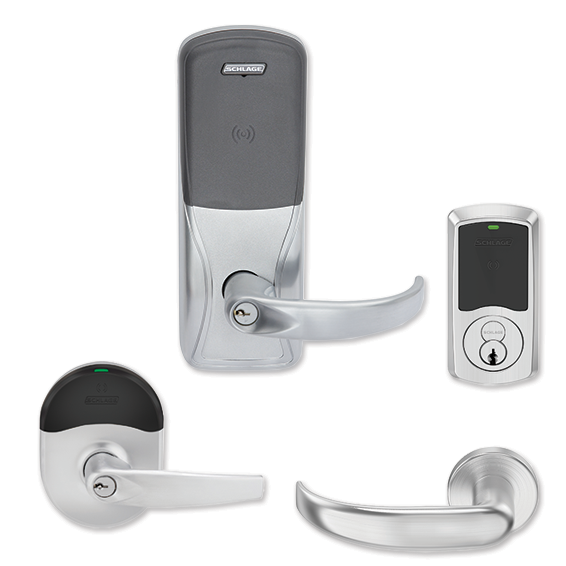
Schlage NDE and LE mobile-enabled wireless locks

Allegion Launches Mobile-Enabled Wireless Locks

Allegion US recently announced the launch of two new Schlage products, the NDE and LE mobile-enabled wireless locks. The products include an Si option that supports HID smart cards and next-generation Seos credentials. The products allow customers with HID smart cards and mobile credentials to extend access control even further into their buildings. The option allows facility managers freedom of choice in the solution that best fits their particular campus.

According to a news release, flexible solutions remain important as institutions and campuses continue to prioritize interoperability and open architecture. The Schlage products are compatible with any building that has an HID reader on the perimeter, allowing a combination of security and convenience while extending electronic access control (EAC) more deeply within the building.
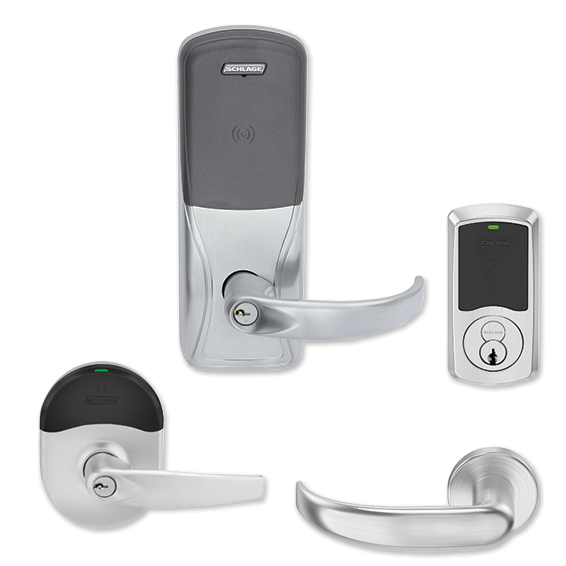
Schlage NDE and LE mobile-enabled wireless locks

“As Allegion works to be the partner of choice, it’s important for us to embrace open architecture and interoperability so we can collectively decrease the complexity and increase the adoption of EAC solutions,” said Devin Love, electronics product leader at Allegion. “In addition to the AD Series locks, the Schlage NDE and LE mobile-enabled wireless locks will provide customers with an expanded portfolio of HID-supported solutions from Schlage. We’re excited about the opportunity to help our customers achieve a more secure, convenient and flexible EAC experience that meets their security and budget needs of today and tomorrow.”

Schlage NDE and LE wireless locks include support from HID smart cards and—when ordered with the Si option—select mobile credentials. Other benefits include freedom of choice and the ability to leverage existing credential investment using the Si option. With this feature, the Si option allows the reading of the secure application area of credentials as opposed to the card serial number, meaning customers can take advantage of smart credentials that they’ve already invested in.

About the Author

Matt Jones is senior editor of Spaces4Learning and Campus Security and Life Safety. He can be reached at [email protected]

Featured

  • Electrified Latch Retraction Locks Key Benefits for Retrofits

    Building owners and facility managers increasingly rely on electrified hardware to enhance security while meeting accessibility standards. Among these technologies, electrified or motorized latch retraction locks are especially effective for retrofit projects where existing door and frame conditions complicate upgrades. Latch retraction capable locks combine security, accessibility and code compliance benefits, making them ideal for retrofitting fire-rated and non-rated openings in schools, healthcare facilities, commercial buildings and more. Read Now

  • How Cloud Security Solutions Are Transforming Campus Safety

    Campus administrators today face a challenging mandate: deliver stronger security across their facilities while working within tighter budget constraints. From school districts focused on student safety to hospitals protecting patients and staff, the question remains the same: how do you build security infrastructure that evolves with your needs without requiring massive capital investments? Read Now

  • Rethinking Campus Security From the Inside

    For decades, campus security strategies focused on keeping threats outside school walls. But since the tragedy at Columbine High School, data has shown that many attacks begin inside the building, often in classrooms and corridors. This shift has prompted schools to rethink security from the inside and place greater emphasis on interior elements such as classroom doors. This shift is evidenced by a new generation of classroom door systems engineered to delay inside intruders and an ASTM standard that raises the bar on how these systems must be designed to defend against attack. Read Now

  • AI in Security: Advancing Campus Safety and Considerations for Implementing

    Artificial intelligence (AI) continues to capture attention across every sector, and the physical security industry is no exception. Once seen as experimental, AI-enabled analytics now underpin how organizations monitor environments, detect threats, and make decisions. What was once futuristic is now a practical necessity for safety professionals managing growing volumes of data, tighter resources, and increasing expectations for faster, more accurate responses. Read Now