Vaping Detection Methods Sought to Curb Youth Nicotine Use
With a dearth of cessation options for youth, early detection and prevention necessary to prevent nicotine addictions
By Joseph BelBruno, FreshAir Sensor
Youth vaping, or e-cigarette use, has risen significantly in recent years, even as rates of other types of nicotine use by youth have fallen. The lack of proven nicotine-use cessation options for youth makes prevention critically important. Detection is a central part of prevention, since youth tend to hide vape use from parents, teachers, and other adults. Promising new vaping detection technology being developed may hold the key for reducing youth e-cigarette use rates in schools and thus for helping teens to quit before they become addicted to nicotine.
Rising vaping rates among youth present public health crisis
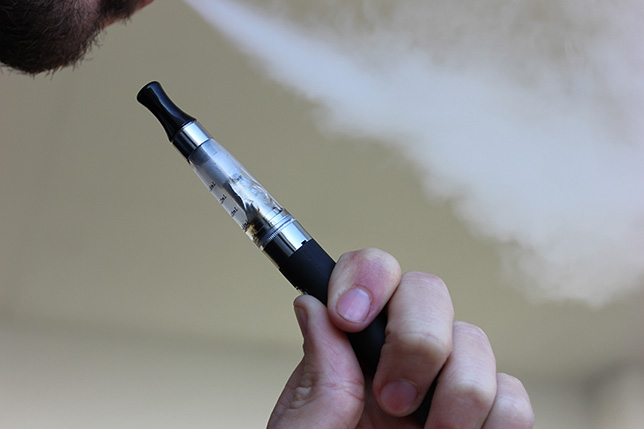
Vaping is a general category that can include the inhalation of nicotine products, marijuana, caffeine, melatonin, and more. Vaping devices function by heating liquids in an atomizer through the use of a battery to create a vapor or aerosol that is then inhaled. The inhalation of any substances can be harmful to youth, but the use of nicotine products that is particularly concerning. A quarter or more of all youth use tobacco or nicotine, and the majority of youth who use nicotine do so using e-cigarette technology.
Although the research on the concrete health risks of vaping is still ongoing, longstanding knowledge about the risk of nicotine use generally indicates that the rapidly rising vaping rates among youth and teens presents a public health crisis. Risks to brain development, lung capacity, and more are serious. What’s more, research has shown that vaping among youth is a significant risk factor for beginning to smoke traditional cigarettes or use other drugs, which carry further health risks.
Although the FDA allows e-cigarettes to make claims about assisting in smoking cessation, research has shown that instead they tend to cause an increase in nicotine use. Youth and teens, who are less likely than adults to understand the science and risks of addiction, generally believe e-cigarettes to be less addictive even though nicotine use is actually rising. In particular flavors, from fruity to mint and menthol, have been shown to contribute to youth nicotine use.
Lack of cessation options makes prevention key
Youth and teens are not only more likely to misunderstand addiction and underestimate its risks; most existing interventions for nicotine cessation are not accessible to youth. There are no FDA-approved Nicotine Replacement Therapies (NRTs) for youth, and no evidence of the effectiveness of such therapies when used, off-label, to treat youth. There is some evidence supporting the effectiveness of behavioral and psychosocial intervention for youth addicted to cigarettes, but it is not yet clear whether that same conclusion can be drawn for e-cigarette use.
In the long term, scientific studies involving youth cessation options could improve knowledge in this area. In the meantime, however, intervention to stop youth from becoming addicted to nicotine through the use of e-cigarettes is critically important. Since vaping devices are easily hidden by youth and teens, improved detection technology could make a major difference in these efforts to prevent nicotine addictions.
Developing a sensor for early detection in schools and beyond
One of the most significant issues facing detection and prevention efforts among youth and teens is finding ways to introduce detection – and thus supervision – in spaces where adult supervision is not typically possible. School bathrooms and locker rooms, for example, have low to no supervision and are currently hotspots for vaping in schools. Increasing “supervision” with the use of vaping detection devices ensures that youth who vape in these spaces are identified, and that unsupervised time for vaping is limited. Developing such a sensor has thus far proven to be difficult, though.
Some organizations have tried to create vaping detection technology using a standard, general sensor for Volatile Organic Compounds (VOCs). While vaping does release VOCs, these detection devices have mixed success in detecting vaping. What’s more, a general VOC sensory is just that - general, non-specific to vaping – and thus does not prove that vaping has occurred as it will detect VOCs from other sources, like cleaning and hygiene products. These devices produce many false alerts. This lack of specificity ultimately makes this kind of detector ineffective. Although in a controlled environment this kind of detector will alert when a vaping device is used nearby, in uncontrolled settings like schools the non-specificity makes it largely useless.
One company, FreshAir, is attempting to apply a new technology to the challenge of detecting vaping. FreshAir has tobacco and marijuana sensors which are widely deployed in schools, hotels, and property management companies. FreshAir’s patented sensors are the only technology that can monitor for, specifically detect, and scientifically prove the presence of airborne cigarette and marijuana smoke. Similar to biological receptors in the body, these detectors have binding sites to bind specific target molecules only present in tobacco and marijuana smoke.
FreshAir’s vaping detection technology, funded by NIH grants, uses a similar technology. Like the smoking sensors, the vaping sensor under development is fashioned after biological receptors and only detects molecules specific to vaping. The sensors have high sensitivity (i.e., can detect low levels of the substance) and high selectivity (i.e., specified to vaping substances alone). A standard VOC sensor, in contrast, might have high sensitivity but has a low selectivity, and thus doesn’t prove that vaping has occurred. FreshAir’s sensor will scientifically prove that vaping has taken place.
The engineering team at FreshAir has already developed a working sensor with high sensitivity and selectivity in laboratory settings. They are now in the process of commercializing the sensors by optimizing and refining them outside of laboratory settings and developing devices to contain them. Although implementation in real-life, uncontrolled environments is far more complicated than in laboratory settings, the FreshAir team hopes to debut the device in 2021.
Conclusion
The rising levels of youth nicotine usage through e-cigarette or vaping technology poses a public health crisis that demands further study and immediate action. Since cessation methods are currently inaccessible to youth, detection and prevention are even more important than they might otherwise be. Although no detection technology is currently on the market which can monitor and scientifically prove that vaping has occurred, such technology is under development for implementation in schools across the country.