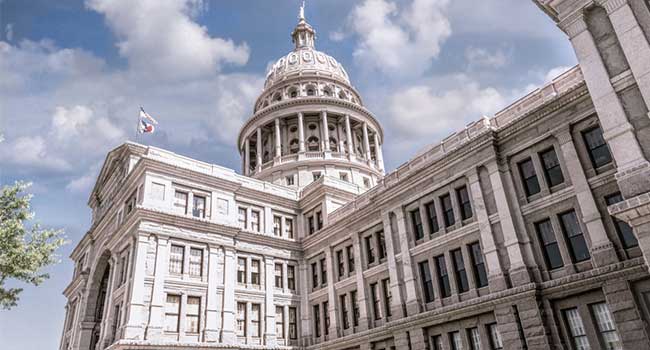
Texas Legislature to Discuss School Safety, Funding

Texas Legislature to Discuss School Safety, Funding

The events of 2018 have school safety at the top of mind for Texas legislation.

School safety and security has been top of mind for Texas legislation since the Santa Fe shooting that killed 10 people last year. 

Gov. Greg Abbot held a roundtable to discuss and look for ways to improve school safety in the state but now it is up to legislatures to see if any of the ideas presented at the round table become law.

Here are the bills to watch:

  • HB 198 would allow school districts to include mental health services in school health programs and look for health care grants to pay for these services.
  • SB 193 addresses the school marshal program, which allows staff to carry concealed weapons. Marshals go through training and their identities are kept confidential. This bill proposes waiving the fee for marshals to get a gun license.
  • SB 243 would require school marshals to use guns loaded with only a specific type of ammunition.

Texas legislature will also be discussing how to fund schools. There are bills on the docket that would require the state to pay at least half of funding for public schools, which is double what the state currently contributes. 

Other educational items to be heard revolve around Texas' charter school, which continue to grow in urban areas. The schools have become controversial because some argue they take away funding from traditional public schools.

About the Author

Sydny Shepard is the Executive Editor of Campus Security & Life Safety.

Featured

  • Electrified Latch Retraction Locks Key Benefits for Retrofits

    Building owners and facility managers increasingly rely on electrified hardware to enhance security while meeting accessibility standards. Among these technologies, electrified or motorized latch retraction locks are especially effective for retrofit projects where existing door and frame conditions complicate upgrades. Latch retraction capable locks combine security, accessibility and code compliance benefits, making them ideal for retrofitting fire-rated and non-rated openings in schools, healthcare facilities, commercial buildings and more. Read Now

  • How Cloud Security Solutions Are Transforming Campus Safety

    Campus administrators today face a challenging mandate: deliver stronger security across their facilities while working within tighter budget constraints. From school districts focused on student safety to hospitals protecting patients and staff, the question remains the same: how do you build security infrastructure that evolves with your needs without requiring massive capital investments? Read Now

  • Rethinking Campus Security From the Inside

    For decades, campus security strategies focused on keeping threats outside school walls. But since the tragedy at Columbine High School, data has shown that many attacks begin inside the building, often in classrooms and corridors. This shift has prompted schools to rethink security from the inside and place greater emphasis on interior elements such as classroom doors. This shift is evidenced by a new generation of classroom door systems engineered to delay inside intruders and an ASTM standard that raises the bar on how these systems must be designed to defend against attack. Read Now

  • AI in Security: Advancing Campus Safety and Considerations for Implementing

    Artificial intelligence (AI) continues to capture attention across every sector, and the physical security industry is no exception. Once seen as experimental, AI-enabled analytics now underpin how organizations monitor environments, detect threats, and make decisions. What was once futuristic is now a practical necessity for safety professionals managing growing volumes of data, tighter resources, and increasing expectations for faster, more accurate responses. Read Now