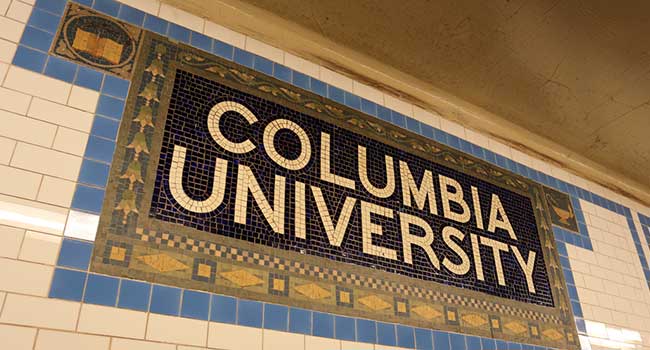
Columbia University Introduces Fire Guards to Campus

Columbia University Introduces Fire Guards to Campus

Following a string of false alarms, Columbia has stationed public safety officers in the East Campus residence hall.

The safety of Columbia University's East Campus residence hall was called into question after a string of false fire alarms. Students in the building became numb to the alarms and began ignoring them rather than evacuating the building safely each time the alarms were triggered.

The university believes condensation in the wiring of the building, among other things, are the culprits behind the false alarms. In order to cut down on the alarms being triggered in a non-emergency, the New York university has elected to station public safety officers in the residence hall 24 hours a day to serve as "fire guards," according to an email that was sent to East Campus residents by Columbia Housing, Residential Life and Fire Safety.

The email announced that the Fire Guards would be on hand 24/7 to immediately investigate every smoke detector that goes off. If the guard "finds smoke or fire conditions" they will manually activate the alarm bell system to signal the evacuation of the building. If there is a false detection, the fire guards will forego the alarm bell system and leave the residence hall undisturbed.

The email stated that the Fire Guards were a temporary solution to the problem. Housing and Fire Safety officials have begun planning meetings with EC residents to discuss issues with the alarms and to find a more permanent solution.

About the Author

Sydny Shepard is the Executive Editor of Campus Security & Life Safety.

Featured

  • Rethinking Campus Security From the Inside

    For decades, campus security strategies focused on keeping threats outside school walls. But since the tragedy at Columbine High School, data has shown that many attacks begin inside the building, often in classrooms and corridors. This shift has prompted schools to rethink security from the inside and place greater emphasis on interior elements such as classroom doors. This shift is evidenced by a new generation of classroom door systems engineered to delay inside intruders and an ASTM standard that raises the bar on how these systems must be designed to defend against attack. Read Now

  • AI in Security: Advancing Campus Safety and Considerations for Implementing

    Artificial intelligence (AI) continues to capture attention across every sector, and the physical security industry is no exception. Once seen as experimental, AI-enabled analytics now underpin how organizations monitor environments, detect threats, and make decisions. What was once futuristic is now a practical necessity for safety professionals managing growing volumes of data, tighter resources, and increasing expectations for faster, more accurate responses. Read Now

  • How Cloud Security Solutions Are Transforming Campus Safety

    Campus administrators today face a challenging mandate: deliver stronger security across their facilities while working within tighter budget constraints. From school districts focused on student safety to hospitals protecting patients and staff, the question remains the same: how do you build security infrastructure that evolves with your needs without requiring massive capital investments? Read Now

  • 77% of Americans Support Gun Detection Technology in Schools, Workplaces, and Houses of Worship

    More than three-quarters of Americans (77.4%) believe gun detection technology should be deployed in schools, workplaces, and other public spaces, according to new survey data released recently. The national survey shows strong support for incorporating camera-based gun detection into existing video surveillance systems. Read Now