Michigan Reps Introduce School Safety Package
Michigan State Representatives Angela Witwer and Jeff Yaroch introduced Tuesday a package aimed at improving school safety practices in the state.
- By Jessica Davis
- March 19, 2019
Michigan State Representatives Angela Witwer and Jeff Yaroch introduced Tuesday a package aimed at improving school safety practices in the state.
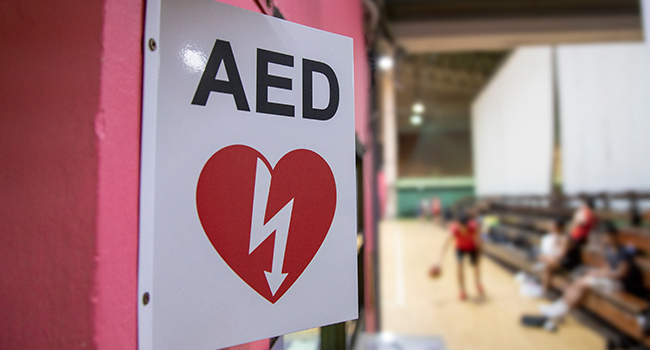
Witwer’s bill calls for an annual appropriation from the Michigan Department of Education to grant funds to high schools that want to purchase Automated External Defibrillators.
According to Witwer, the legislation was prompted after she heard about a student-athlete who lost consciousness and died during a workout in 2017. An AED machine was used last year in Fruitport to resuscitate and save the life of a basketball player whose heart stopped during practice.
About 75 percent of schools in Michigan already have AEDs on site, but many districts remain on the waiting list.
"It is up to us as legislators to ensure every possible step is taken to protect our students," Witwer said. "Thankfully, situations where these machines are needed do not arise often, but in those cases, access to an AED can be the difference between life and death. When it comes to the lives of our children, there is no precaution too small to consider."
Yaroch’s bill would require public schools to have trauma kits on-site and train staff and faculty on how to use and maintain the materials. The trauma kits would contain items like tourniquets and compression bandages to help stabilize an injury victim during the wait for emergency responders.
"Trauma is the third leading cause of death in the U.S., and the most preventable cause is bleeding," Yaroch said. "We want to help our schools be better prepared in these life-threatening emergencies."
Yaroch’s bill is part of the Department of Homeland Security’s national Stop the Bleed campaign, which aims to help improve survival from life-threatening bleeding. Among other aspects, the campaign encourages bystanders to learn proper bleeding-control techniques and aims to equip schools with lifesaving tools like trauma kits.
Watwer’s bill, House Bill 4333, was referred to the House Appropriations Committee. Yaroch’s bill, House Bill 4332, was referred to the House Committee on Education.
About the Author
Jessica Davis is the Associate Content Editor for 1105 Media.