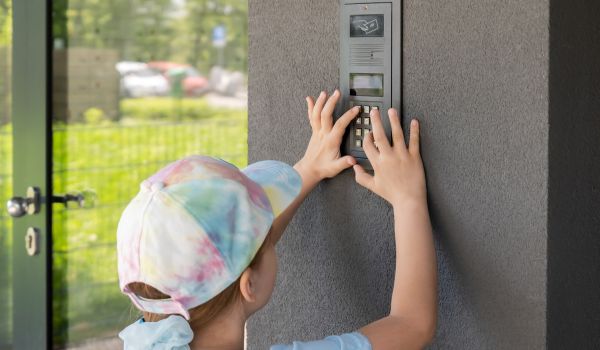
How Electronic Access Control and Compartmentalization Strengthen School Security
Electronic access control and interior compartmentalization can strengthen school security, enabling rapid lockdowns while maintaining safe egress and responder access.
- By Ken Cook
- February 18, 2026
Security vulnerabilities in schools often come down to something as simple, yet critical, as unlocked doors.
Exterior entrances and classroom doors left unsecured can provide easy access to threats, undermining even the best-intentioned safety plans. Electronic access control (EAC) offers a powerful solution by enabling rapid, remote locking that quickly secures critical entry points.
Securing the exterior and classrooms is only part of the solution. Thoughtful interior compartmentalization using features like corridor doors and conjoining classroom doors can create an added layer of protection by limiting movement inside the building and establishing protected zones when combined with EAC, enhancing school security without compromising safe egress or emergency responder access.
Why Focus on EAC and Compartmentalization?
Exterior and classroom doors are typically seen as the most crucial layers in defense: preventing unauthorized entry, controlling arrival flow and securing learning spaces. EAC systems help make those actions faster and more consistent than manual locking alone, and they can be configured for centralized lockdown and remote override for emergency responders.
Interior doors, such as corridor doors and conjoining classroom doors, play a supporting role by limiting internal movement if primary entry points are breached. Together, these layers can slow an intruder’s progress, protect evacuation paths and create more manageable zones for responders.
The Role of Compartmentalization Doors
Doors are more than just passive architecture. Schools commonly use doors as components of a compartmentalization strategy, not just for life safety but also to limit movement through the building when necessary—from the Final Report of the Sandy Hook Advisory Commission, these design features may be appropriate in impeding entry or delaying movement of unwanted individuals.
Corridor doors are one way that schools can compartmentalize different areas of the building.
They are typically fire-rated, meaning they are constructed and evaluated to resist and delay the spread of fire and smoke for a specified duration. To fulfill their life-safety function, they are designed to be self-closing, ensuring that once opened, they will return to a fully closed and latched position without manual intervention.
It is not unusual for doors to remain open in high-traffic areas, like school corridors. However, they must be propped correctly, using a wedge or other object to prop them open defeats the self-closing purpose of a fire door assembly.
To balance life safety with day-to-day operational needs, schools may equip these doors with electromagnetic hold-open devices. These devices use magnets to keep the doors open during normal building occupancy, allowing unobstructed movement through hallways.
When a fire or panic alarm is triggered, these magnets are released automatically, causing the doors to close and latch. This rapid closure helps contain smoke, fire or potential threats within defined areas.
Challenges and Considerations
Integrating EAC and compartmentation requires balancing competing priorities. EAC can secure doors rapidly, but doors secured electronically must still allow free egress from the protected side without keys, special knowledge or delay.
Electromagnetic hold‑open devices integrated with an alarm system allows doors to close and latch automatically upon alarm activation, and EAC can automatically secure the doors. Any security design that could impede evacuation should be carefully evaluated against applicable codes and reviewed with the authority having jurisdiction. Corridor doors may be incorporated with EAC, but it must be done with careful consideration of evacuation routes and life safety codes.
Passage of the Partner Alliance for Safer Schools (PASS) white paper warning is instructive: “A closed door may delay movement, but a locked door actively restricts access, which can be a valuable asset during a security event but a liability during normal operations or emergencies where free movement is necessary.”
PASS recommends evaluating hold‑open strength, supervision, door monitoring and safeguards (delayed release/locking logic, staff and first-responder release capability or door status alarms) to avoid unintended consequences.
To strike a balance between compartmentalization and life safety, emergency overrides may be implemented. Solutions include master credentialing for first responders, rapid‑access key/credential vaults (e.g., Knox‑type boxes where allowed) and controlled overrides. Whatever method is chosen, it should be standardized, communicated to responding agencies and exercised during joint drills, so responders know how to navigate zones and access overrides under pressure.
Practical Next Steps
It can feel overwhelming to align EAC, compartmentation and life‑safety requirements. To help simplify the process, there are clear, actionable starting points you can focus on right away:
Audit exterior and classroom doors to assess vulnerabilities to help decide whether EAC is right for the door and location.
Evaluate lockdown integration to ensure hold-open devices release automatically and doors automatically lock during shelter-in-place events without compromising egress or responder access.
Coordinate with local authorities having jurisdiction (AHJ) and emergency responders to establish universal key or rapid-access solutions, share building maps with door status and override locations and conduct joint drills.
Develop and enforce clear policies prohibiting door propping, and train staff on door functions and emergency protocols.
Implement routine maintenance and monitoring of door hardware, hold-open devices and integrated systems to help ensure reliable operation during emergencies. Ensure that the door trim on the locking side is configured so it cannot be left in the unlocked position.
Ultimately, decisions about door hardware and automation should balance two priorities: preserving safety and unobstructed egress while limiting movement throughout the building but still supporting prompt responder access.
EAC is a powerful tool for reducing unauthorized entry and enabling rapid lockdowns; interior compartmentation can complement a holistic security plan by limiting internal movement and creating manageable secure zones. When treated as coordinated layers rather than standalone fixes, these elements can help improve both everyday safety and emergency resilience.