Why Every Gunshot at a School Matters
- By David Riedman
- September 15, 2022
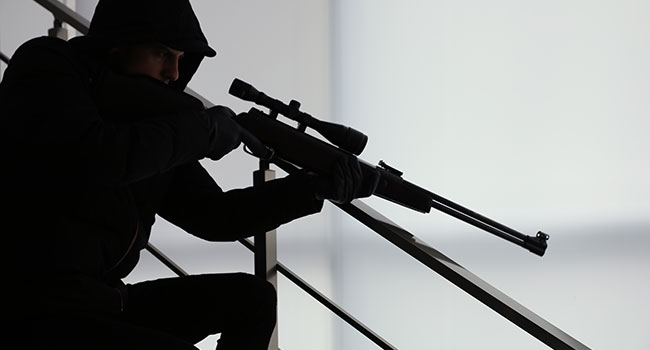
A sniper in a fifth-story apartment fires 300 shots at a school just before dismissal. He had multiple automatic rifles and 1,000 rounds. Government reports wouldn’t consider this worst-case scenario attack to be a “mass shooting”—or even a “school shooting.” That’s a problem.
What is the K-12 School Shooting Database?
Uvalde was one of the worst school shootings in history. We hear that, but how do we know it? Prior to the creation of the K-12 School Shooting Database (k12ssdb.org) after Parkland in 2018, this was a difficult question to answer.
Prior to this database, the landscape of publicly available information compiled on school shootings arose from a wealth of sources including peer-reviewed studies, government reports, archived newspapers, mainstream media, non-profit entities, private websites, personal blogs, and crowd-sourced lists. Individually, however, these platforms failed to capture the magnitude of the problem. For example, government reports on school shootings by the U.S. Secret Service, FBI, and Department of Education provide an explanation of factors contributing to shootings, but they do not catalog a comprehensive list of the incidents. Lists of shootings reported by the media identify many incidents but provide few details beyond dates and locations. Databases of school shootings on blogs and crowd-sourced websites have extensive lists of school shootings but lack citations to primary sources. Without a common methodology for data collection, individual data sources are limited in both validity and utility.
The K-12 School Shooting Database remedies this void by capturing more than 2,060 incidents from 1970 to the present in which a gun was brandished or fired, or a bullet hit school property for any reason. This definition, which is deliberately broad, enables users to decide what data is important to answer their questions and make better-informed decisions about school safety. The database’s objective is to systematically record every time shots are fired at a school because there is value in being able to collectively study every different type of incident. For example, a student shot in the hallway by a deranged former-student shooter suffers the same injury as a student bystander struck in the chest by the crossfire of a gang-dispute shooting in the cafeteria. The 8-year-old girl killed during one of the 50 shootings in 2021-22 at high-school football and basketball games is the same age as the children murdered inside their classroom in Uvalde. Shootings on school campuses outside of traditional school hours have significant consequences on students and the community.
Inversely, brandishing—such as those instances where the shooter initially made threatening gestures with a firearm, but was stopped prior to getting off a shot—are also included in the K-12 SSDB. It’s important to study all the factors leading up to a student intent to commit a shooting before a last-second weapon malfunction or being tackled by a bystander. Although often excluded from other national reports, which focus solely on injuries or deaths, these “near misses” offer significant research opportunities because a greater loss of life could have occurred. Near misses can also offer an opportunity to highlight what went right in preventing an incident from having a greater loss of life.
The K-12 SSDB includes detailed information about each incident including when (e.g., morning classes, lunch, sporting event), where (e.g., hallway, classroom, gym, parking lot), and why shots were fired (e.g., indiscriminate attack, suicide, escalation of dispute, illegal activity). To better understand who was involved, the age, demographics, and relationship to the school (e.g., student, teacher, parent, non-student attending game) are included for each victim and shooter.
Broad Focus Beyond ‘Mass Shootings’ and ‘Active Shooters’
On the news each week, we tragically hear about how many “mass shootings” happened this year. While these headlines are commonplace, there is surprisingly little consensus on what a mass shooting is, or how many there have been. There is not a commonly agreed-upon definition or criminal charge specific to a school shooting, mass shooting, or active shooter.
The Department of Homeland Security, FBI, Department of Justice, media outlets, and academics all have their own definitions of a mass shooting based on four or more fatalities. It’s usually not a mass shooting if it’s gang-related, drug-related, part of another crime (like five people shot during a bank robbery), a serial killer, domestic violence, or inside a private residence. The government doesn’t count 25 people shot at a block party in Chicago as a “mass shooting” if police suspect the shooter, or victims, were gang members. Similarly, 25 people wounded wouldn’t be a “mass shooting” if none of them died—even though that would be a major crime scene and emergency response operation. Labeling the attack as gang violence versus a mass shooting doesn’t change the outcome for bystanders caught in the crossfire.
Deciding that something is a “mass shooting” based on four fatalities is utterly arbitrary. Mass public violence is about the intent to kill as many people as possible, just like terrorism is the intent to send a message through violence. If a bomb in a marketplace kills two people instead of 200, is it not terrorism because there weren’t enough victims? The number 4 doesn’t magically render a shooting important. We should focus on the circumstances and intent of each situation, rather than the number of victims. Saying “This is the nth mass shooting this year” is an empty statement lacking substance or rigor. Such meaningless proclamations dilute our attempts to understand a complex problem with dozens of variables, including the type of weapon, how proficient a shooter was with the weapon, emergency response time, distance to hospitals, and dozens of other factors that impact whether a person lives or dies.
An “active shooter” is even more complicated. Homeland Security defines an active shooter as someone “actively killing in a populated area without a pattern or method to select victims”. Based on this definition, the Uvalde school shooter would not be an “active shooter” because students within his fourth-grade classroom were purposely targeted. The FBI’s definition differs slightly by adding that an active shooter must be an ongoing incident. Based on the public timeline of the Uvalde shooting, about 30 minutes passed between the last shot at children inside the classroom and police entering. Because the shooting was not continuous, it wouldn’t meet the FBI’s definition. Despite not meeting the DHS or FBI definition, nobody would question that Uvalde is exactly the type of attack we consider to be an “active shooter.”
Definitions of a school shooting are even more complicated. In their annual report on targeted school violence, the Secret Service only considers an attack to be a school shooting if the perpetrator is a current or recently former student. Based on this definition, the Secret Service would exclude Uvalde, Sandy Hook, or dozens of other indiscriminate attacks on schools committed by nonstudents.
Attacks That Would Be Missed Without Inclusive Definition
On the afternoon of April 22, 2022, a group of teens crossed a glass sky-bridge connecting buildings at the Edmund Burke School, an elite prep school in Washington, D.C. Students walked across this bridge hundreds of times daily. Suddenly, the glass exploded around them, gunshots pierced the air, and an ordinary Friday plunged instantly into a horrific nightmare. Without hesitating, the young students ran as fast as they could, straight for the stairs. When they got to the exit, a staff member screamed, “Get back inside, there’s a shooter!” They sprinted back up the stairs to a classroom, where they huddled together on the floor for hours, fearing for their lives.
Those students crossing the elevated bridge at that moment had no idea of the crosshairs of a rifle traced across them as they walked. A man hidden in a fifth-floor apartment across the street had them lined up in his sights. We know this because the shooter posted a video from his rifle scope on the Internet immediately after the shooting. While he squeezed the trigger, his automatic rifle jumped wildly as he fired 60 shots indiscriminately in just 18 seconds. Windows on both sides of the bridge were shattered, yet by some miracle, only one student on the bridge was wounded. A former police officer working school security, a parent, and a bystander were also hit. Nobody died, and without four deaths, this heinous attack was not a “mass shooting.”
The shooter had six weapons, including three “AR-style” rifles, in his darkened fifth-floor apartment. It remains unclear why he stopped shooting and committed suicide. As he waited for police to arrive, he updated the Edmund Burke School’s Wikipedia page to make an entry for his attack. The shooter had no known relation to the school; thus, the Secret Service will not study this case as a “school shooting” for their next report.
Sniper attacks are a rarely practiced scenario, yet Edmund Burke is one of just six times a long-distance shooter has targeted school children since Brenda Spender shot 11 people at Cleveland Elementary in San Diego in 1979. Ten years later, 37 students and staff were shot by a sniper at a different Cleveland Elementary in Stockton, Calif.
Without a comprehensive database using a broad definition of “school shootings,” attacks like this wouldn’t be recorded and analyzed. Arbitrarily ignoring a significant share of gun violence, both the harrowing and mundane, is a costly mistake for our students and our future.
This article originally appeared in the September / October 2022 issue of Campus Security Today.