Illinois District Adds Door Lock Systems for Security

Illinois District Adds Door Lock Systems for Security

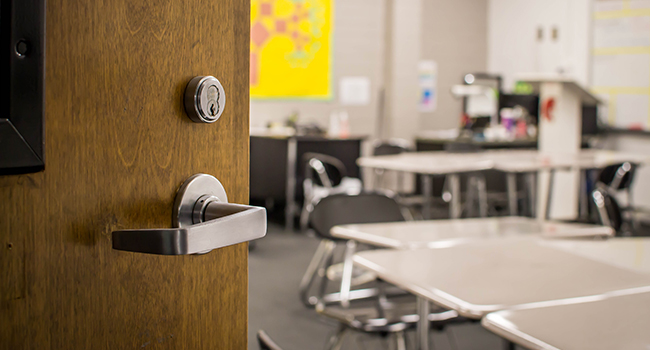
Western Community Unit School District aims to have a lock system on every door in the school and on the additional outside doors by winter break.

Western Community Unit School District has been increasing security on its campuses, focused particularly on access control.

The district added lock systems on many of the doors at the high school and elementary school about a year ago, and teachers say it’s helped them and their students feel safe.

“That’s our number one priority, that they’re learning and they’re learning safely and we want them to know, as soon as they enter school that it’s a safe environment and they can be comfortable and the door locks help us with that,” fourth grade teacher Sarah Hillijoss told WGEM.

Every classroom teacher has a key card to allow them into each classroom. Superintendent Jessica Funk said the interior lock systems have been so successful that the district is adding more secure access points.

“With the door system, we are adding a few more exterior access points,” Funk said. “We are always looking for ways to continue to make things safer and protect us through any situation that might come up.”

The district has also added an intercom system to schools.

“Every time there’s an announcement from the office, or anything we need to be alerted of immediately, they come over the intercom and it’s for the whole school and we can automatically hear it,” Hillijoss said.

Western Community Unit School District aims to have a lock system on every door in the school and on the additional outside doors by winter break. The district plans to add these upgrades to the junior high as well once they’re able to fund the locks.

The current security system cost $160,000 and the intercom system cost about $25,000. The funds came from state grant money.

About the Author

Jessica Davis is the Associate Content Editor for 1105 Media.

Featured

  • Electrified Latch Retraction Locks Key Benefits for Retrofits

    Building owners and facility managers increasingly rely on electrified hardware to enhance security while meeting accessibility standards. Among these technologies, electrified or motorized latch retraction locks are especially effective for retrofit projects where existing door and frame conditions complicate upgrades. Latch retraction capable locks combine security, accessibility and code compliance benefits, making them ideal for retrofitting fire-rated and non-rated openings in schools, healthcare facilities, commercial buildings and more. Read Now

  • How Cloud Security Solutions Are Transforming Campus Safety

    Campus administrators today face a challenging mandate: deliver stronger security across their facilities while working within tighter budget constraints. From school districts focused on student safety to hospitals protecting patients and staff, the question remains the same: how do you build security infrastructure that evolves with your needs without requiring massive capital investments? Read Now

  • Rethinking Campus Security From the Inside

    For decades, campus security strategies focused on keeping threats outside school walls. But since the tragedy at Columbine High School, data has shown that many attacks begin inside the building, often in classrooms and corridors. This shift has prompted schools to rethink security from the inside and place greater emphasis on interior elements such as classroom doors. This shift is evidenced by a new generation of classroom door systems engineered to delay inside intruders and an ASTM standard that raises the bar on how these systems must be designed to defend against attack. Read Now

  • AI in Security: Advancing Campus Safety and Considerations for Implementing

    Artificial intelligence (AI) continues to capture attention across every sector, and the physical security industry is no exception. Once seen as experimental, AI-enabled analytics now underpin how organizations monitor environments, detect threats, and make decisions. What was once futuristic is now a practical necessity for safety professionals managing growing volumes of data, tighter resources, and increasing expectations for faster, more accurate responses. Read Now