Florida Private School Adds Emergency Alert System

Florida Private School Adds Emergency Alert System

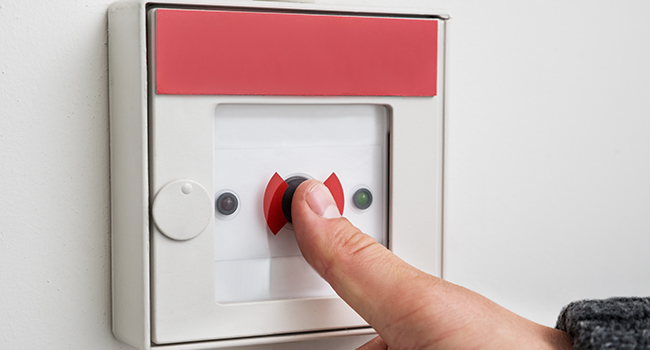
The system, which costs about $35,000, includes flashing alarms, emergency push button boxes and alert push button pendants.

Jupiter Christian School installed a security alert system during winter break that can notify law enforcement in case of an emergency.

“The reduction of time and the response—if it saves one life, the system is worth it,” director of facilities and operations Jacob Godino told Fox 29 WFLX.

The alert system technology was developed by a Jupiter, Fla., father who wanted to help schools protect students after the deadly Feb. 14, 2018, Parkland shooting.

The system, which costs about $35,000, includes flashing alarms, emergency push button boxes and alert push button pendants.

"It serves two purposes - one is to distract the attacker and it also serves a purpose to alert the students," said Hector Delgado, president of ASR Alert Systems, which developed and installed the system.

Delgado said that the system empowers teachers by allowing them to immediately notify the police in case of an emergency instead of having to pick up a phone and manually dial 911.

When an emergency button is pushed, it takes 3 to 5 seconds for local law enforcement to be notified. The system also notifies designated people on the school’s campus.

"It will say Jupiter Christian School, it will give them the address and it will tell them what floor, what classroom the button was pressed," Delgado said. "Now that school resource officer who might be on one end of the school knows exactly where the alarm has been pushed and he can start or she can start moving.”

Jupiter Christian School is the first K-12 school in the U.S. to install the system.

According to Godino, it’s meant to enhance the campus’ current security measures, which include 2 armed guards, rather than replace them.

“We can’t stop medical emergencies but we can speed up the way we respond to them,” Godino said.

About the Author

Jessica Davis is the Associate Content Editor for 1105 Media.

Featured

  • Shooter Still at Large In Brown University Shooting that Killed Two, Injured Nine

    Three days after a mass shooting at Brown University that killed two and injured nine, police are still searching for a suspect. That’s according to CNN. Read Now

  • Electrified Latch Retraction Locks Key Benefits for Retrofits

    Building owners and facility managers increasingly rely on electrified hardware to enhance security while meeting accessibility standards. Among these technologies, electrified or motorized latch retraction locks are especially effective for retrofit projects where existing door and frame conditions complicate upgrades. Latch retraction capable locks combine security, accessibility and code compliance benefits, making them ideal for retrofitting fire-rated and non-rated openings in schools, healthcare facilities, commercial buildings and more. Read Now

  • Rethinking Campus Security From the Inside

    For decades, campus security strategies focused on keeping threats outside school walls. But since the tragedy at Columbine High School, data has shown that many attacks begin inside the building, often in classrooms and corridors. This shift has prompted schools to rethink security from the inside and place greater emphasis on interior elements such as classroom doors. This shift is evidenced by a new generation of classroom door systems engineered to delay inside intruders and an ASTM standard that raises the bar on how these systems must be designed to defend against attack. Read Now

  • AI in Security: Advancing Campus Safety and Considerations for Implementing

    Artificial intelligence (AI) continues to capture attention across every sector, and the physical security industry is no exception. Once seen as experimental, AI-enabled analytics now underpin how organizations monitor environments, detect threats, and make decisions. What was once futuristic is now a practical necessity for safety professionals managing growing volumes of data, tighter resources, and increasing expectations for faster, more accurate responses. Read Now